
The National Oceanic and Atmospheric Administration could get more aircraft and pilots to fly into hurricanes and tropical storms if a bill introduced in the Senate on Wednesday is eventually enacted.
The legislation aims to triple the size of NOAA's hurricane hunter fleet, according to a CNN story published Wednesday by former Capital Weather member Andrew Freedman. The three existing aircraft in the fleet, two of which are known as "Kermit" and "Miss Piggy," are aging and have increasingly faced mechanical problems.
Hurricane hunter aircraft measure the winds within developing tropical systems and collect additional data critical to producing accurate model forecasts of a storm's intensity and track. They are also used to gather data from atmospheric rivers. These long plumes of moisture in the atmosphere are common along the Pacific Coast and can produce extremely heavy rain or snow.
The bill would "direct the agency to at least six planes and a maximum of nine — and help pave the way for the funding," Freedman wrote.
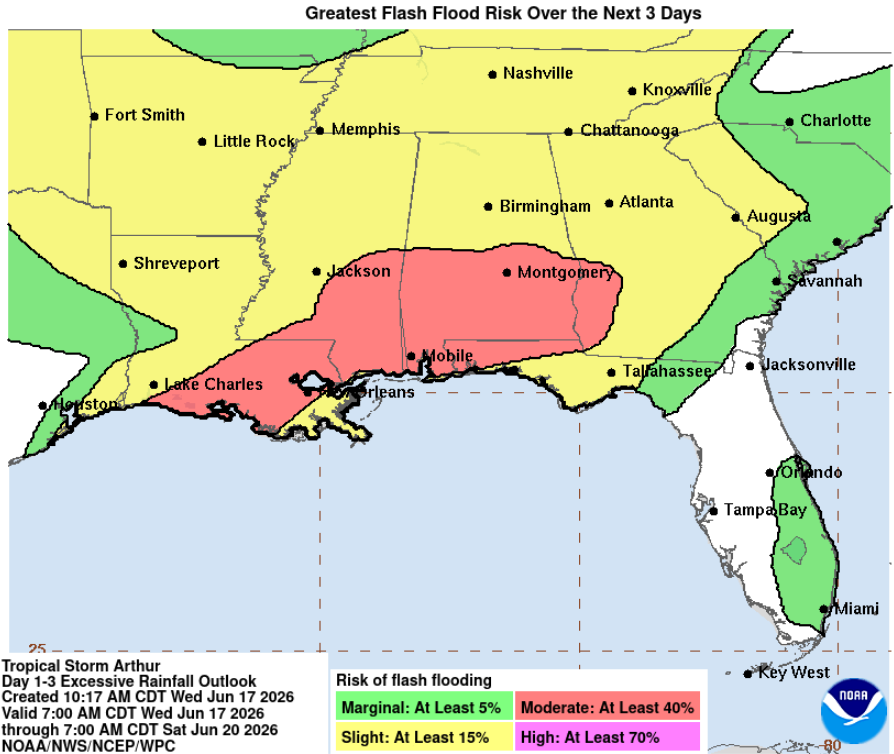
The bill was introduced on the same day the season's first tropical storm formed in the Atlantic basin. The system, named Tropical Storm Arthur, formed in the Gulf of Mexico this morning just off the southeast Texas coast.
While a hurricane hunter plane found that the storm's wind speed had reached 45 mph, above the 40 mph threshold for becoming a tropical storm, flooding rainfall appears to be the main threat with this system.
The National Weather Service has issued a flood watch that stretches from just east of Houston across portions of Louisiana, Mississippi, Alabama, Georgia, and the Florida Panhandle. The system has already dumped flooding rains in parts of Texas this week before becoming a tropical storm.
"Tropical Storm Arthur is expected to produce rainfall totals of 5 to 10 inches, with isolated higher totals near 20 inches, through early Friday," the National Hurricane Center said. "This could generate dangerous to life-threatening flash flooding."